
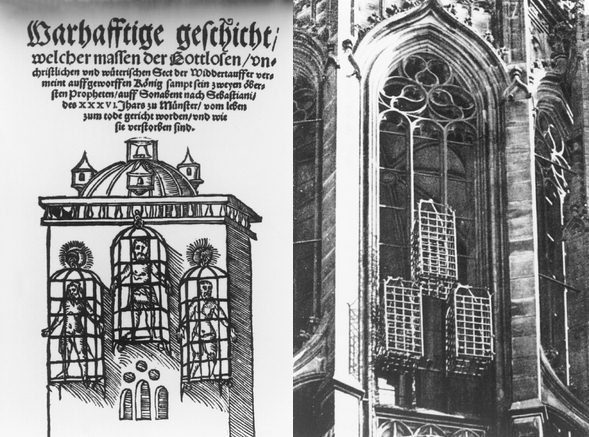
The condition of being “Mennonite” is not a stable condition; it is a site of contingencies, of ongoing conversation and new commitments, a realization that “Mennonites” have been experimenting with “post-Mennonite” identities.
– Paul Tiessen, “Postmodern Practice and Parody,” in Anabaptists and Postmodernity (Cascadia, 2000), 116.
The pacifist tradition of the Mennonites and the history of sixteenth century Anabaptist groups informs my other projects in several ways, the most important of which is the influence of the unique critique of violence advanced by both theological and secular representatives of the tradition. My other writings on the politics of time, the concept of violence, conspiratorial thinking, and social accountability are each motivated by a critique of ontological violence that challenges categorical distinctions between religion and secularity, and resists both epistemological and corporeal forms of violence – each of which are uniquely conceptualized in recent philosophical approaches to Mennonite pacifism.
Over the next few years, I will be gathering and expanding my work in Mennonite Studies in a book called Mennonite Metaphysics: Social Critique Out of the Sources of the Radical Reformation, under contract with Cascade’s Theopolitical Visions series.
Project Outline
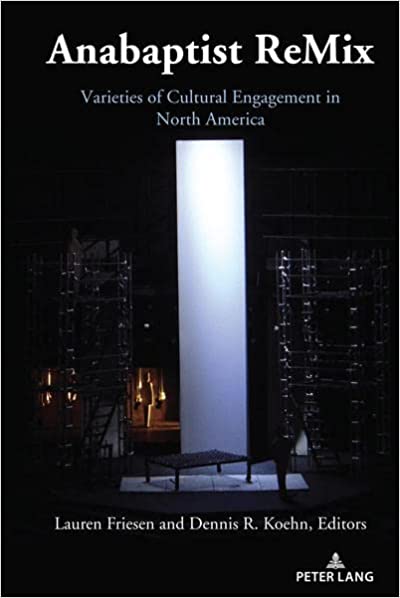
On January 8th 2020 I presented a précis of this project at a scholar’s forum at the Toronto Mennonite Theological Centre. My lecture was titled “Secular Mennonite Social Critique: Pluralism, Interdisciplinarity, and Mennonite Studies” and it summarized my wider research agenda in this area. This programmatic piece now appears under the same title in an essay collection called Anabaptist Remix (Basel: Peter Lang, 2022).
In short, my approach to reconceptualizing Mennonite Studies interprets Mennonite texts and figures that depart from traditional theological and historical frames of reference. Rather than studying Mennonites at a distance by talking about them, and rather than seeking to preserve the tradition by speaking solely from within it, I attempt to think with and against Mennonite critiques of violence by reading minority figures in and around the tradition.
“Maxwell Kennel uses the term ‘secular Mennonite’ to refer to ‘anyone who considers themselves to be a Mennonite (by identifying with the name) but does not necessarily see Christian theology or assent to doctrinal truth-claims as the primary determiner of their Mennonite identity’ (58). Many people in North America would identify that way, and many of them do great work, relevant to this volume’s project. I have struggled making sense of this essay, and I have discovered that my struggle came from my effort to fit it into the ‘roads out of town’ frame I inherited from Koehn and Friesen. Kennel’s work, in fact, does not fit neatly within that paradigm. It is here that I found that the paradigm breaks down, and in the breakdown we can make better sense of the volume as a whole. Kennel wants his approach to be plural and interdisciplinary. He engages with ‘Secular, Philosophical, Political, and Literary Mennonites’ (56 ff). He notes that both academic theology and academic history are reluctant to make normative and prescriptive claims about identity (53). He does want to be able to make claims about Mennonite identity, but not by being limited by either history or theology – and especially not by their academic norms.”
-Ben Woodward-Breckbill in Mennonite Life 77 (2023).
“All of the volume’s essays, poems, and reflections make a valuable contribution to the book’s purpose; however, several stand out as especially significant contributions to the Kansas vision of nonsectarian anabaptist engagement. Maxwell Kennel offers an agenda secular and interdisciplinary social criticism that is affirmative of Mennonite commitments without being doctrinally dogmatic… the only scholar in this volume who seems interested in sixteenth century Anabaptism is Maxwell Kennel, who proposes Hans Hut’s ‘gospel of all creatures’ as an alternative early Anabaptist theological paradigm for secular criticism.”
– Gerald Mast in the Mennonite Quarterly Review 97 (October 2023).
Anabaptists and Philosophy Roundtable Lecture
I am also involved in organizing the Anabaptists and Philosophy roundtable lecture series, and on April 27th 2022 I gave the second lecture in the series titled “Anabaptism contra Philosophy,” which was followed by a response from Dr. Christian Early of James Madison University.
In general, I focus on literary, political, philosophical, and secular Mennonite thinkers from a pluralistic and interdisciplinary perspective (outlined below).
Literary Mennonites
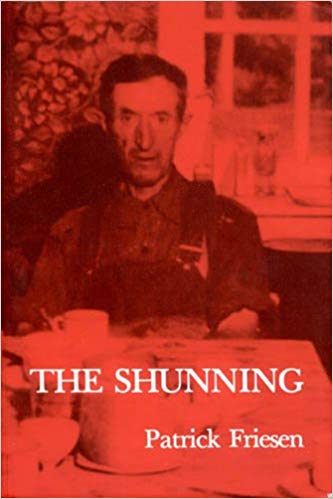
My work on Mennonite literature focuses on the artistic and poetic portrayal of community violence in works like Patrick Friesen’s The Shunning (in Literature and Theology in 2019), and the secular-feminist-Mennonite identities of literary figures like Miriam Toews (in Hamilton Arts & Letters in 2020).
Political Mennonites

My work in the area of Mennonite Political Theology (published in the July 2019 issue of the Mennonite Quarterly Review) focuses on politically engaged Mennonite thinkers and their dialogues with feminist theologians, and also includes my editions of two pamphlets – published on the Anabaptist Historians site – that express the breadth of historical Mennonite engagement with political problems from racism to extremism.
Philosophical Mennonites
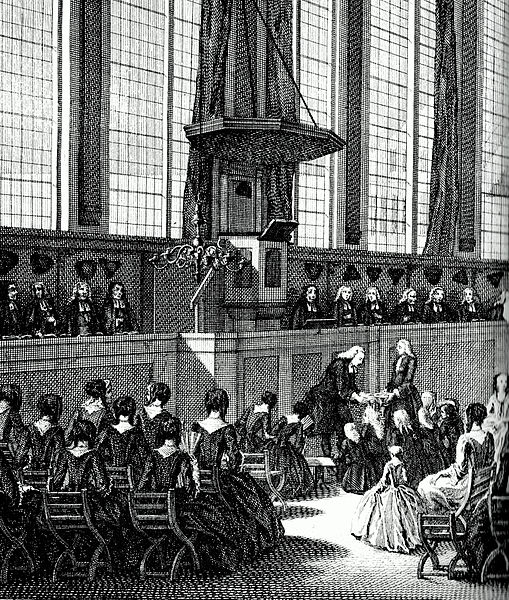
I have also traced the history of philosophical Mennonites in my article on Mennonite Metaphysics (in the July 2017 issue of the Mennonite Quarterly Review), and more recently in an updated entry for the Global Anabaptist Mennonite Encyclopedia Online (April 2020).
Secular Mennonites

My work on secular Mennonite identity and its unique forms of social critique includes: my introduction to historian Robert Friedmann’s manuscript Design for Living (Wipf and Stock, 2017), an update published with Anabaptist Historians (July 2020), and and essay on an early Anabaptist form of natural theology called “The Gospel of All Creatures” (in the 2019 issue of the Journal of Mennonite Studies).
Interdisciplinary Approaches to Mennonite Studies
In May 2021 my guest-edited special issue of Political Theology on “Mennonite Political Theology” published contributions from confessional, queer, secular, and feminist Mennonite scholars. My introduction is titled “Interdisciplinary Approaches to Mennonite Political Theology,” and the exciting contributions include Susanna Guenther Loewen’s essay “The Personal is Political: The Politics of Liberation in Mennonite-Feminist Theologies,” Daniel Shank Cruz’s study, “Mennonite Speculative Fiction as Political Theology,” Russell Johnson’s intervention, “Building Peace in a Culture War: Christian Witness in a Polarized Society,” and a translation of an intriguing funeral sermon by Hans Harder, “Between Bourgeois Existence and Violence,” (1979).
I have also argued for an interdisciplinary approach to Mennonite ethics and technology in a recent article in the Conrad Grebel Review, titled “Violent Inclinations,” which explores posthumanism, posture, and the politics of the body.

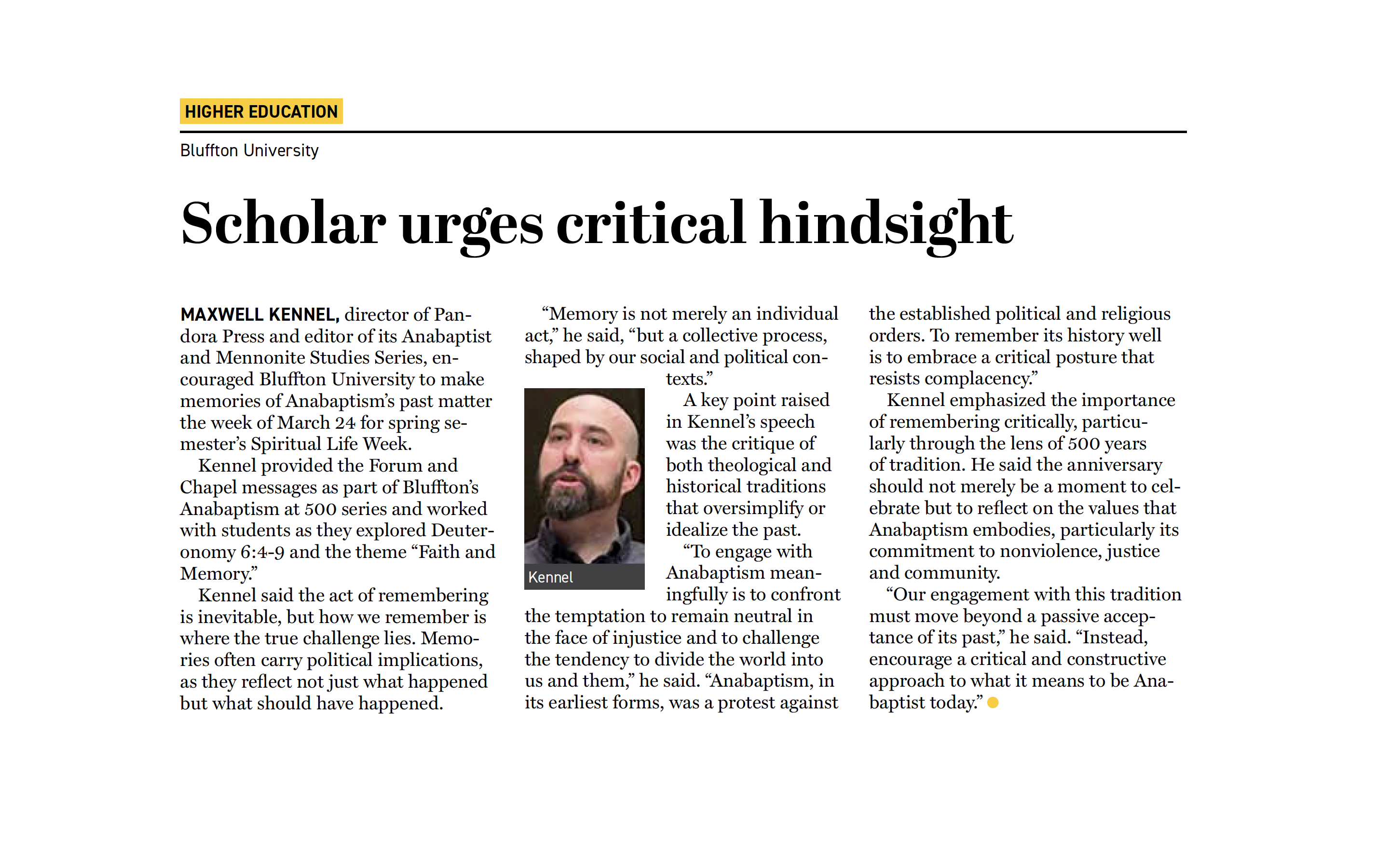
 Dr. Maxwell Kennel