
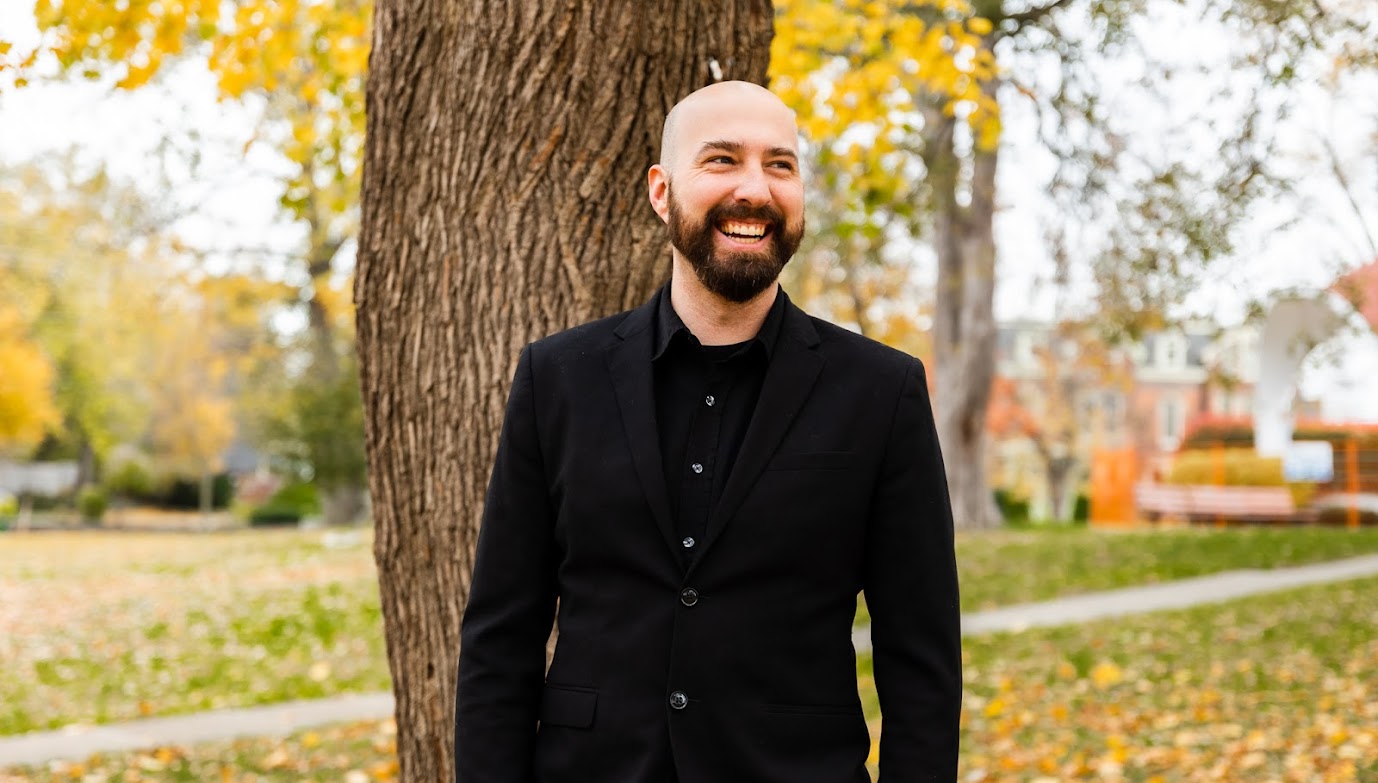
I am a scholar of religion and politics interested in how social bonds of public trust animate key concepts like postsecularity, violence, conspiracy, and accountability. I use the combined paradigms of critical theory and political theology to approach these terms, asking how their normative and descriptive characteristics intermingle, while working constructively to critique both neutrality and polarization in the scholarly and public spheres.
My research, writing, teaching, and editing work are distributed across several different institutions, organizations, and projects detailed below, but the through-line of my ongoing research programme concerns how conflicts of values in pluralistic western democracies unfold across troubled distinctions between religion and secularity.
I am a Senior Research Fellow with the Canadian Institute for Far-Right Studies (CIFRS) with whom I am workshopping my postdoctoral book Critique of Conspiracism, which is under contract with Routledge’s Conspiracy Theories book series, edited by Peter Knight and Michael Butter.
I am the Director of Pandora Press and editor of its relaunched Anabaptist and Mennonite Studies Series which has published ten volumes over the past two years, most recently two important translations in Anabaptist history by Astrid von Schlachta and Thomas Kaufmann.
I am also a coinvestigator on the CREATE Project (a SSHRC Partnership Project), which I was instrumental in developing in my capacity as a Senior Research Associate at the Dr. Gilles Arcand Centre for Health Equity (formerly the Centre for Social Accountability) at the Northern Ontario School of Medicine University (NOSM U) in Thunder Bay, Ontario. From April 2022 to August 2024 I worked on an interdisciplinary team exploring socially accountable research in medical education under the direction of Erin Cameron, and I remain connected to the Arcand Centre as an Affiliate. I have also served as the Social Accountability Coordinator with Towards Unity for Health (TUFH) – an official non-state actor of the World Health Organization – where I co-directed the inaugural Social Accountability Fellowship for deans of medical schools from around the world, the proceedings of which are available in a special issue of the Social Innovations Journal.
In October 2024 I began serving as the Pastor at the Hamilton Mennonite Church – a progressive LGBTQ+ affirming congregation in the Mennonite Church of Eastern Canada – where I do pastoral care, committee and policy work, and preaching and teaching on a number of theological and public issues, from mental health and spiritual health, to conspiratorial thinking and depolarization, to Anabaptist and Mennonite history and theology. I think carefully about the complex relationship between my scholarly activity and my work within the Mennonite church, all in ways that mediate between the often-competing interests of confessional-theological normativity and critical analysis in the Humanities and Social Sciences (inspired by the work of scholars who also held ministerial positions or had pastoral sympathies like Michel de Certeau or Reiner Schürmann). My academic work and published perspectives – of course – are not a reflection of the diversity of perspectives in my congregation.
Background
I am a scholar of religion and politics, and my writing, research, and teaching cross various disciplines in the Social Sciences and Humanities while focusing on key concepts like violence, history, conspiracy, and accountability. In May 2021 I defended my dissertation in the Department of Religious Studies at McMaster University, and between Fall 2021 and Spring 2023 I was a Social Sciences and Humanities Research Council (SSHRC) Postdoctoral Fellow in the Department for the Study of Religion at the University of Toronto, where I developed my third book, Critique of Conspiracism, under the supervision of Pamela Klassen.
Teaching
Over the past several years I have taught courses on the scholarly study of religion (Spring 2019 & 2021, syllabus), the complex intersections between religion and violence (Fall 2018, syllabus), the relationship between religion and conspiracy theories (Fall 2022, syllabus), and on connections between religion and apocalypse (Winter 2023, syllabus). In Spring and Summer of 2023, I taught two 6-week intensive graduate courses on research in education for change and instructional design in the Faculty of Education at Lakehead University.
Research Projects
My research is broadly situated in the discipline of Religious Studies, within which I take an interdisciplinary and pluralistic approach to the complex relationship between religion and politics (also known as “Political Theology“). I focus on the problem of violence, religious and political uses of time and history, the normative foundations of social critique, select topics in Mennonite Studies, the problem of conspiratorial thinking, and critical theories of social accountability and health equity.
As such, my work is divided into five interrelated projects:
- History: My first book Postsecular History: Political Theology and the Politics of Time (Palgrave Macmillan, 2022) examines the religious and political ways that time and history are divided, valued, and periodized. Interviews about the book have appeared in Anabaptist Historians, DSR Communications, and the New Books Network, and a symposium on it was published in Political Theology. See here for a recent review of the book in Reading Religion.
- Violence: My second book Ontologies of Violence: Deconstruction, Pacifism, and Displacement (Brill, 2023) develops a critical theory of violence that treats the concept as a name for the violation of value-laden boundaries, and then uses this paradigm to interpret the works of Jacques Derrida, Mennonite political theologians, and feminist philosopher of religion Grace M. Jantzen. Part of its third chapter was first published in the UK journal Angelaki in 2022, and July 2023 saw the release of an interview on the book with Caleb Zakarin at the New Books Network. Most recently, a review in Marx & Philosophy suggested that the book “undoes easy sloganeering and even challenges the headiest of theorizing in order to bring to the fore what is left unsaid when the term ‘violence’ is said.” A panel on the book was hosted by the Theology and Continental Philosophy unit at the American Academy of Religion online meetings in June 2024, and a symposium on the book is forthcoming in Syndicate.
- Conspiracy: My ongoing postdoctoral book project (which I am treating as something akin to a habilitationsschrift) is called Critique of Conspiracism (Routledge, under contract). It brings my critical work on violence and history to bear on the problems of conspiratorial thinking and issues of public health. So far I have presented my work on the project at the American Academy of Religion annual meetings, and taught a course on the topic at the University of Waterloo. The book is slated for submission in 2025 and will likely be published in 2026.
- Anabaptist and Mennonite Studies: I have also undertaken a broader project that reconceptualizes Anabaptist and Mennonite Studies in critical and interdisciplinary terms (see here for a succinct account of the tradition and its complexities). I am currently developing a book of essays on the topic called Mennonite Metaphysics (Cascade, under contract). The perspective that I am developing has already been featured in my guest-edited special issue of the journal Political Theology (May 2021), a programmatic book chapter called “Secular Mennonite Social Critique” (July 2022), and a polemical article “Anabaptism contra Philosophy.” I am also the director of a small publishing company called Pandora Press where I edit a scholarly book series in Anabaptist and Mennonite Studies that published its first ten volumes in 2023-2024, with several more on the way in 2025-2026.
- Social Accountability: In my work as a co-investigator on the CREATE Project, I draw upon contemporary critical theory to inform interdisciplinary approaches to socially accountable research practices. My work on Social Accountability is summarized in my recent lecture: “What is Social Accountability? Philosophical and Critical Considerations” Human Sciences Seminar Series. NOSM University, Thunder Bay. Thursday January 18th 2024 (an invited, accredited CEPD session, with a recording available here, and lecture text available here). I was involved with the work of the International Social Accountability Steering Committee (ISAASC) in coordinating its 2023 symposium series, the TUFH Social Accountability Fellowship, and have supported the AFMC Standing Committee on Social Accountability.
Some of my work remains on academia.edu, and my CV provides a comprehensive picture of my research trajectory: CV_Maxwell Kennel_2024 copy
[photo credit: minhal.ca]
 Dr. Maxwell Kennel