
It has been a wild year of changes and projects, and I find it helpful to recap the year’s highlights in my research programme for the sake of my own reflection and for anyone who is curious about what I have been working on, so here’s an overview of some fun recent work from 2026.
AAR 2025
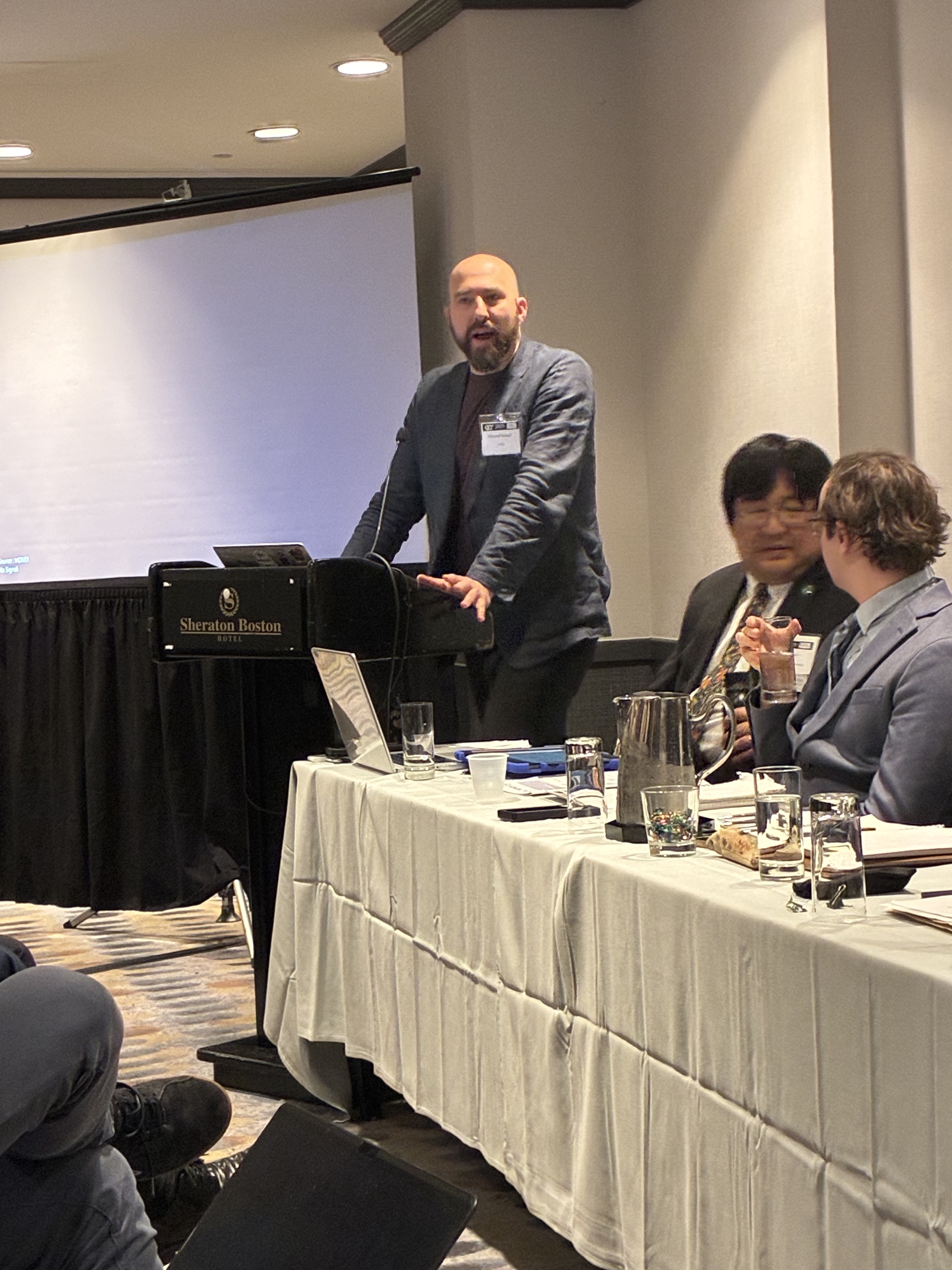
A few weeks ago we returned from the American Academy of Religion annual meetings in Boston where it was great to stay with my friend and colleague Rob Jones, and to connect at the Mennonite Scholars and Friends meetings that happen on the Friday before the conference. Drew Hart’s presentation on his book Making it Plain was fascinating, and the reception afterward was a great chance to catch up with a number of colleagues who I had not seen in a long time, especially Jennifer Otto, whose book on martyrdom will come out with Fortress Press in 2026.
This year I had the pleasure of giving a paper called “Conspiracism as Political Theology: Project 2025 and Ecclesiologies of Conspiracy” in the Ecclesiological Investigations unit, just following an excellent paper by David Congdon called “Resident Arsonists,” that covered the political poverty of the postliberal theological vision in the context of Project 2025. The paper will likely be published later in the year in Ecumenical Trends, and will certainly become part of my forthcoming book on conspiracism and critique.
Critique of Conspiracism Project
My work on Critique of Conspiracism continues under the auspices of the Canadian Institute for Far-Right Studies, and I am thinking about the most meaningful ways to link together this research project with a case study on the role of conspiracism in the demonization of the Anabaptists (via charges of conspiracy) in light of the Münster rebellion in 1534-35 and its complex reception in Germany. Considering the ‘theatricality of power’ (analysed in Arthur Bradley’s new book Staging Sovereignty, for example), and its relationship with charges of conspiracy, I am hoping to draw on two new books that I have had the pleasure of editing for the Anabaptist and Mennonite Studies series with Pandora Press:
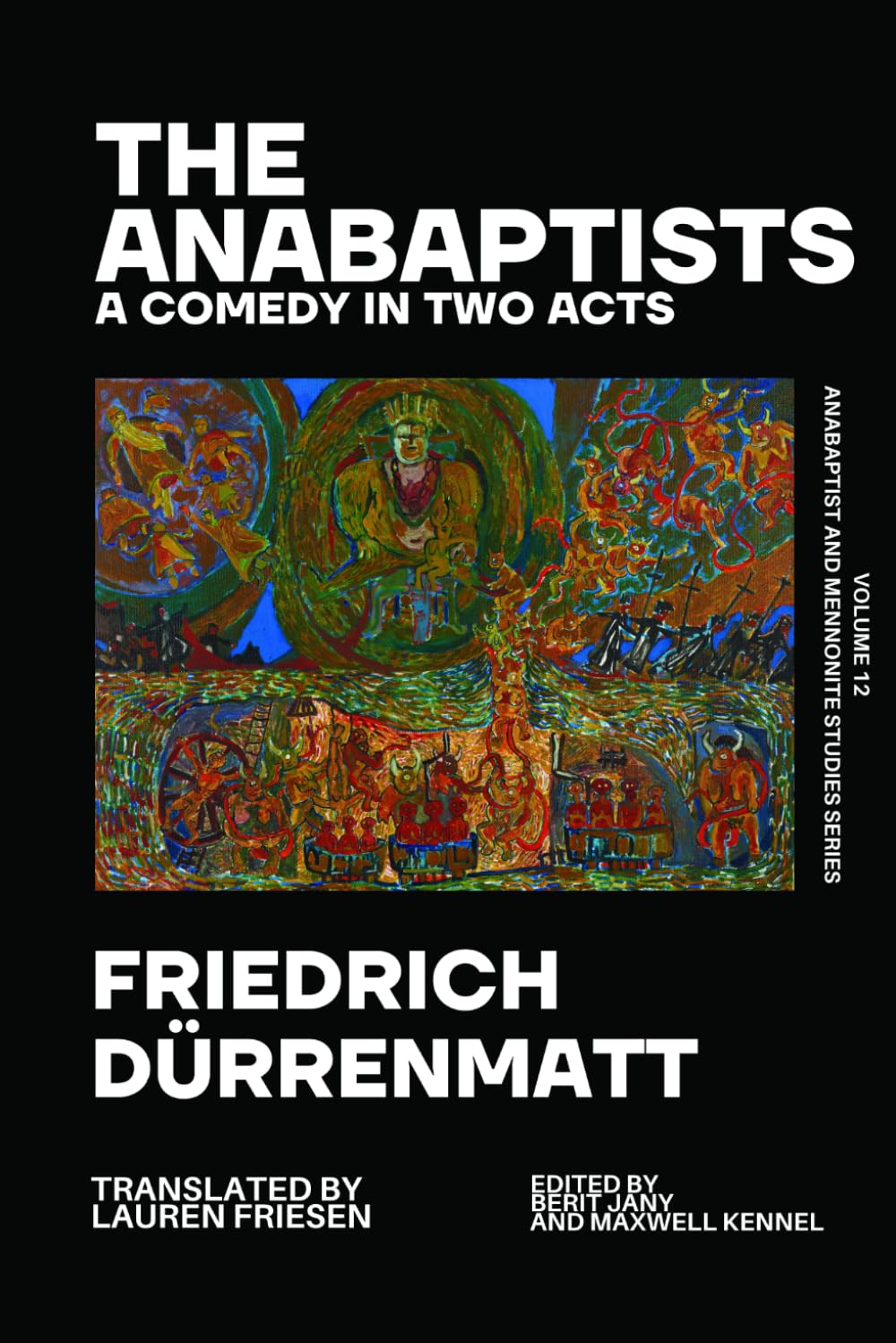
Friedrich Dürrenmatt, The Anabaptists: A Comedy in Two Acts. Translated by Lauren Friesen. Edited by Berit Jany and Maxwell Kennel (Hamilton, ON: Pandora Press, 2025).

Hans-Jürgen Goertz, Conrad Grebel (1498-1526), Critic of Pious Facades: A Biographical Sketch. Translated by Christina Moss. Edited by Maxwell Kennel (Hamilton, ON: Pandora Press, 2025).
The contents of these two books – a play on the Anabaptists and a biographical sketch of an Anabaptist – both show something of how controversy, conspiracy, theatricality, and scandal (what Goertz calls “the greatest scandal of the Christian west: the first adult baptism”) are ambivalent strategies of power that contribute to positive social critique and to the social pathologies of demonization. I am excited to both publish these books, and to interpret them in my work on political theology and critical theory.
Social Accountability Project
Another key marker of conspiracism is a lack of accountability, and this year a number of important publications came out in connection with my work on social accountability in medical education, which is part of the the CREATE Project, a SSHRC Partnership Grant Project that I worked on during my time at NOSM University.
In my contributions to the following pieces I have continued to emphasize how accountability is predicated on social bonds of public trust that are threatened in our time, and which call out for constructive critique:
- “Characterising socially accountable research: a scoping review protocol paper,” Maxwell Kennel*, Kerri Z. Delaney*, Jennifer Dumond, Jessica Jurgutis, Alex Anawati, Joseph LeBlanc, David Marsh, and Erin Cameron (*co-first-authors), British Medical Journal Open 15 (7) (2025). [https://pubmed.ncbi.nlm.nih.gov/40615139/]
- “Empowering Faculty in Socially Accountable Medical Education,” Maxwell Kennel, Ghislaine Attema, Jyotsna Rimal, Prattama Santoso Utomo, and Nicholas Torres. Social Accountability of Medical Schools: Empowering the Future of Medical Education and Healthcare. Ed. Mohamed Elhassan Abdalla, Mohamed Hassan Taha, Charles Boelen (Cham, Switzerland: Springer Nature, 2025).
- 10. “Socially Accountable Research,” Maxwell Kennel, Kerri Delaney, Jessica Jurgutis, Joseph LeBlanc, Sarah Larkins, Karen Johnston, Erin Cameron, Social Accountability of Medical Schools: Empowering the Future of Medical Education and Healthcare. Ed. Mohamed Elhassan Abdalla, Mohamed Hassan Taha, Charles Boelen (Cham, Switzerland: Springer Nature, 2025).
- Larche CL, Kennel M, Tackett S, Marsh DC, Cameron E. “Enhancing Social Accountability in Medical Education and Accreditation: A Meeting Report.” Advances in Medical Education Practice. 2025;16:471-476 [https://doi.org/10.2147/AMEP.S508928]
Messianic Political Theology
In addition to the connections between conspiracism, the complex demonization of the Anabaptists, and the intricacies of accountability, I am also interested in how our messianic expectations of a future saviour tend to lend themselves to conspiracism. This connection will also be on my mind as I work on Critique of Conspiracism, but in the meantime, I will point to the following collection. On messianic political theology, there is likely no better teacher than Travis Kroeker, for whom I had the pleasure of co-editing a festschrift for, which came out late this year:
Messianic Imagination: Politics, Theology, and Literature. Edited by Joseph Wiebe, Paul G. Doerksen, Maxwell Kennel, and Grant Poettcker; foreword by Stanley Hauerwas. (Eugene, OR: Cascade, 2025): 290 pp.
—Includes a co-authored editors’ introduction, and my chapter “Critique of Possessive Desire,” 77-92, included below with permission of Wipf and Stock.
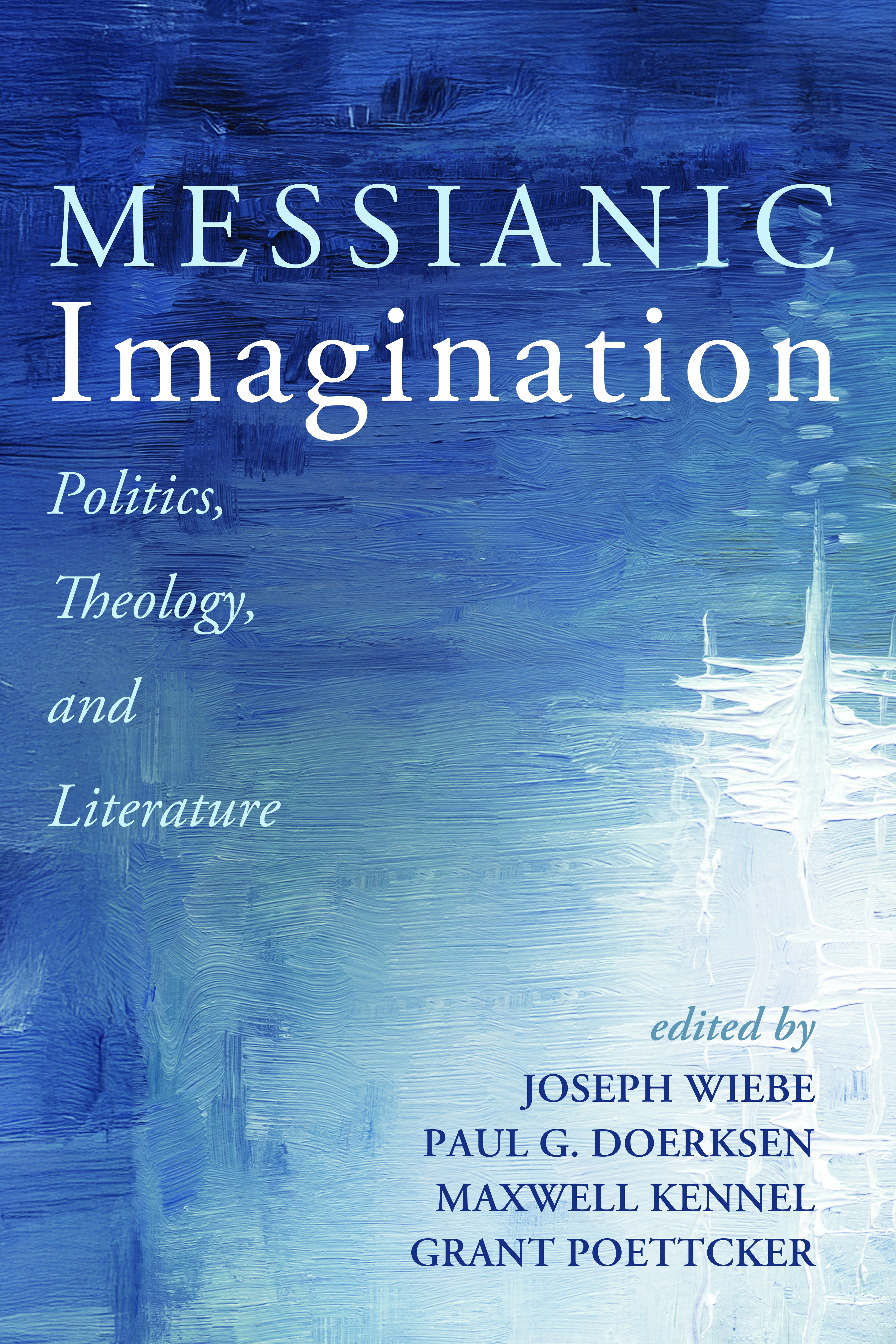
It was a pleasure to write a chapter for the volume on Kroeker’s work, and to try to express what it is about his messianic political theology that I find so compelling, but which is anything but his own possession – a paradox that has a great deal of mysticism to it.
More to Come…
There’s so much more to say – from my experiments with a new literary series, to the upcoming reprint of Braden Matthew’s cult classic Solarium, and the upcoming republication of a source collection on Mennonite mutual aid and toleration by Jeremy Bangs – but vacation time is here!
For further updates, please see below for a few recent interviews and an updated CV:
Recent Interviews
- “Domination and Dignity: A Conversation with Vincent Lloyd on the Black Radical Tradition” Theory, Culture & Society. [https://journals.sagepub.com/eprint/RPBGYINAH7FZUABAN2DD/full]
- Astrid von Schlachta’s Anabaptists (with Caleb Zakarin), New Books Network (May 6, 2025) [https://newbooksnetwork.com/anabaptists]
- “Publisher-Pastor: An Interview with Maxwell Kennel” (with A.S. Compton) The Canadian Mennonite 29.4 (24 February 2025). [https://canadianmennonite.org/publisher-pastor/]
- “Menno in Athens, Philosophy in Anabaptism? An Interview with Ron Tiessen” Mennonite Life 78 (2024). [https://ml.bethelks.edu/2024/07/08/menno-in-athens-philosophy-in-anabaptism-an-interview-with-ron-tiessen/]
 Dr. Maxwell Kennel